
The Q4 2025 benchmarking report for UK convenience stores has just been published. Learn how 10 of the top UK convenience stores perform across the digital space.
The Q4 2025 benchmarking report for UK convenience stores has just been published. It covers 10 of the largest national convenience stores, including Budgens, Costcutter, Londis, Nisa, One Stop Stores, The Premier Stores, SPAR UK, Best One, Keystore, and One O One Convenience Stores - it highlights year-on-year digital performance, plus winner and loser comparisons in 20+ online performance metrics.
The research gives an inside track on who is winning the biggest share of voice online and quantifies the gaps, risks and missed opportunities for other convenience stores to win brand exposure locally, increase in-store footfall, and drive traffic online. The report highlights quick wins that will improve enquiries from your online strategy and identifies the barriers that may be reducing your site’s ability to optimise digital performance.
To see a preview and contents page of the Q4 report, click here. To get a copy of the full report and the key takeaways, please complete the enquiry form or schedule a call.
Q4 2025 Winners and Losers Summary
For a glance into just 6 of the metrics we evaluated these top 10 convenience stores on, check out our quick-look table below;

Continue reading for further detail on this quarter's best and poorest-performing UK convenience stores or request a copy of the report for the full review.
What The Industry Research Report Covers
The 70+ pages of research benchmarks each brand based on 50+ metrics and indicators of successful digital strategy, including organic visibility, domain authority, paid media ads, conversion performance, technical performance, site speed, universal search, content, social ads, accessibility, and mobile performance.
Driving Optimal ROAS from Paid Media Channels
Some of the leading players in the space are high spenders on paid media channels such as Google, Bing & Facebook - but have a poor or sub-optimal conversion improvement strategy. Without an optimised, sophisticated conversion strategy that maximises the conversion rate, the return on investment is unsustainable or will under-perform. Scaling spend on paid media is not achievable unless the conversion rate delivers optimal performance in the sector. Some in the space have paid media spend levels from 30k+ per month but dedicate minimal resources and budgets to conversion testing. Given the cost per clicks on ad networks will continue to rise, we recommend spending at least 10% of your paid media budget on ongoing conversion optimisation testing schedules to ensure your paid media ROI maintains long term viability, competitive advantage, and sustainability.
Technical Website Compliance
Savvy digital marketers know that having a technically sound website is an essential component of a successful fully integrated digital strategy - plus a site capable of maximising conversion performance. For convenience stores, they'll want to take particular care that key pages, such as store locators, are clearly sign-posted.
In our previous report, One O One Convenience Stores received the most 404 errors (38). This quarter, One O One Convenience Stores remains the store to watch, and they’ve since increased their 404 errors to a total of 71. Improving site structure and maintaining clear URL naming conventions can significantly reduce the chance of new 404 errors appearing. When content is organised logically, it becomes easier to update without accidentally breaking links. A tidy structure helps both users and search engines.
Site Speed & Conversion Rate Performance
When 62% of consumers are less likely to convert if they have a negative mobile site experience, ensuring that your site is quick and easy to load makes a significant improvement on your overall conversion rates. Convenience store customers will often be visiting sites on the go, looking for nearby branches that they can immediately visit. Therefore an optimal mobile page experience is essential for giving a good impression of the brand.
In the last quarter, Costcutter received the slowest mobile site speed (35). This quarter, Costcutter has increased their mobile site speed to 47, demonstrating they’ve made improvements to their website. Currently, the mobile site speed ranges between 78 and 29, with Nisa receiving the slowest speed. Ensuring quick mobile performance shows that a brand values accessibility, convenience, and user satisfaction. Regular monitoring protects the brand’s reputation while supporting long-term growth. By providing a seamless mobile experience, brands strengthen loyalty and build trust with every visitor.
Building Competitive Advantage with Domain Authority
Domain authority is an essential metric for measuring the effectiveness of SEO performance, and helps create a reliable overall gauge of how effective your site is at achieving organic traffic, ie. ‘free’ traffic that isn’t gained through sponsored ads. With a range of products on offer, convenience stores should be able to create digital PR campaigns spanning multiple content themes, giving them a range of opportunities to build authority.
A ‘good’ DA really comes down to how your competitors are performing, however it is generally considered average between 40 and 50, good between 50 and 60, and excellent above 60. One O One Convenience Stores received the lowest DA score (5), while SPAR UK received the highest DA (62). Sites with strong domain authority are often able to outrank newer or weaker competitors simply because search engines view them as more established. This allows them to secure more visibility across a wider range of search terms.
Organic Performance – Mobile & Desktop
A strong organic performance is strategically important as it ensures your site ranks above competitors for key, transactional keywords. When 93% of your customers won’t go past the first page of Google, your absence or lack of targeting for essential keywords will cost you conversions. Due to the cost-of-living crisis, we're seeing that many potential customers across a number of sectors are either cutting back on expendable items, or opting for cheaper alternatives. Convenience stores may be feeling the impact of this, as their potential customers may be taking greater care to do larger shops at cheaper supermarkets, as opposed to picking up items as needed.
Six brands reported a drop in organic traffic on desktop, with Best One receiving the biggest loss (-37%). On mobile, 5 brands saw a drop in organic traffic, with Best One also receiving the biggest loss (-79%). Mobile users commonly browse while on the go, during commutes, or in short bursts of time, which affects how they interact with search engines. Desktop users, on the other hand, typically browse in more settled environments, influencing the depth of their engagement and the types of queries they use.
Universal Search Opportunity
Google Universal Search Results is an evolving opportunity to make your pages visible on a SERP (Search Engine Results Page). Universal results often appear before traditional listings and are eye-catching for users. Universal search results refer to rankings on a SERP that are not the traditional ‘blue line’ Google link, and a brand can appear for universal search results without being strong in standard rankings. For convenience stores, they'll want to ensure they're appearing for 'Local Pack' results, ensuring they are prominent when potential customers are looking for a nearby shop.
SPAR UK continues to report the most Universal Search appearances (8,280) — a decrease from 11,700 previously. The majority of their appearances came from ‘images’ (5,900).
The Longtail Keyword Opportunity
Longtail keywords are often considered high intent and potentially more likely to convert as a searcher is being more specific. Optimising for longtail keywords also puts your content strategy in a strong position to rank for brand-new search terms as they enter Google’s index. For convenience stores, long-tail keywords could be focused on specific products that potential customers are looking for, and a strong performance here could see quick visits from local customers needing a last-minute ingredient or essential item.
SPAR UK continues to secure the most longtail keyword appearances for position 3 (1,502) — a decrease from 1,602 previously. SPAR UK also secured the most appearances for positions 4–10 (3,557) — a decrease from 3,594 previously. Longtail keywords are highly effective for boosting organic traffic because they capture very specific search intent. Users typing longer, detailed queries usually know exactly what they want, which means a website has a better chance of matching that intent closely. This relevance helps pages rank more easily compared with broad, competitive keywords.
Facebook Adverts
With the number of Facebook users in the United Kingdom (UK) hitting over 44 million users in 2023, it is not surprising that companies have jumped at the opportunity to advertise on the social media platform. Facebook’s UK digital advertising revenue has been estimated to have breached 2.6b GB pounds in 2019. For convenience stores, they can use Facebook adverts to drive awareness of deals or sales events, or use local targeting to improve brand awareness in areas that footfall is low.
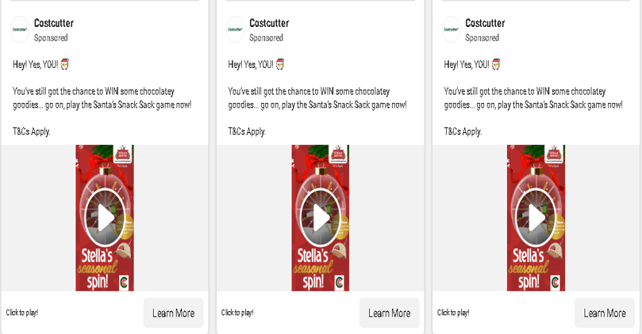
We’ve included screenshots of Costcutter’s sponsored Facebook posts. This UK convenience store included the same text and video on each post, which could be repetitive for their audience and deter them from engaging with the content.
Top Social Shares & Content
When it comes to social media and on-site content strategies, it is important to release content that has a longer shelf life. An article is considered 'Evergreen' if it has maintained its relevancy to an audience for longer. It's great for your brand engagement, but great for Google too, who will recognise content which achieves traffic over a long period of time. As we've mentioned previously, convenience stores can create content supporting any of their product lines, whether that's through recipe content, household cleaning items, or seasonal ranges.
Budgens secured the most Facebook Likes (237,600), and Costcutter secured the most Instagram followers (21,200). Facebook was the most popular social media platforms of all brands. Nisa received the highest total engagement rate (1,120) and the highest average engagement (32).
Website Readability & Accessibility
20% of people in the UK have a disability – 2 million of which are people living with sight loss. In addition, 1 in 12 men and 1 in 200 women have some degree of colour vision deficiency. When websites are not designed to meet these needs, brands lose customer interest as they turn elsewhere. Convenience stores will want to ensure a 'convenient' brand experience for all potential customers, at any digital (or in-store) touchpoint.
In our previous audit, One O One Convenience Stores received the most accessibility alerts (89). This quarter, One O One Convenience Stores remains the brand to watch, and they’ve since increased their accessibility alerts to a total of 99. Accessibility improvements also support stronger performance in search engines. Many accessibility best practices—like clean code, structured headings, and readable text—align with technical SEO principles. This means fewer alerts often lead to better visibility and higher organic traffic.
GET THE FULL 70-PAGE Q4 2025 REPORT
To get a copy of the full report, please complete the enquiry form. If you want to talk to us about accelerating your digital performance, please call us on 01543 410014 or schedule a call with Rory Tarplee.