


Confused about canonical tags and how to use them? Digital & Technical executive Tom Williams has created this quick starters guide that details everything you need to know about these SEO essentials.
So, What is a Canonical Tag?
A canonical tag is a HTML link element that has been designed to help webmasters prevent issues relating to duplicate content. It is used to specify the ‘canonical’ or ‘preferred’ version of a web page.
[‘HTML Link Element’ refers to a relationship between the current page or document and another resource.]
Google, Yahoo and Microsoft announced their support for the canonical tag in February 2009, allowing webmasters to clearly show all the major search engines which page is the preferred version.
Google says this link element is a ‘hint’ they will honour strongly rather than a ‘directive’. Google will consider your preference, along with other signals when determining which page to display in the SERPs (search engine results pages).
Matt Cutts (Head of Webspam at Google) said the canonical tag should be treated like a 301 redirect:
It should be treated like a 301 and won’t be indexed. Instead, its PageRank/anchor text flows to the canonical URL.
How to Use Canonical Tags
The code should be placed within the <head> section of a webpage and it should look like this (replacing the example.com domain with your own):
<head>

	<link rel="canonical" href="http://www.example.com/" />

</head>
An example given by Google shows the same product filed under a different category:
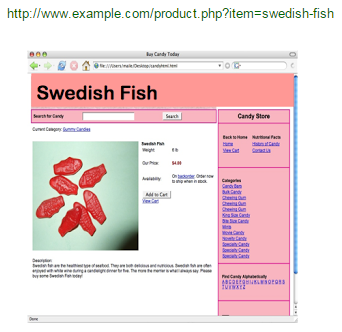 Source: Google Webmaster Central blog.
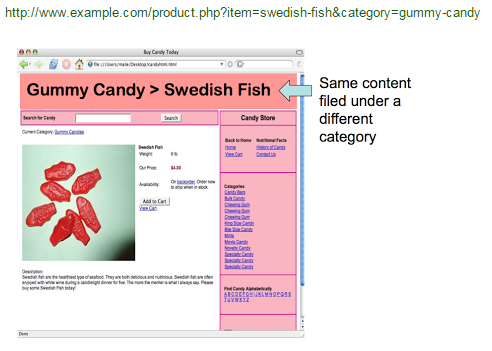 Source: Google Webmaster Central blog.
The canonical link element should be placed on one of these web pages (pointing to the original version) so search engines know which one to show within the search results.
Other Key Points to Note
Canonical tags can also be used across different domains allowing webmasters to reference other websites. This is mainly used for syndicated content.
Is it okay to place a canonical tag on the canonical page? Yes, there is no indication that placing a self-referencing canonical tag on your webpages will cause any harm.
Matt Cutts backed this theory up:
It’s totally fine for the preferred version of the page to point back to itself. I’d recommend using absolute URLs just to prevent any potential problems from popping up, but that should be no problem at all.
I hope this post has given you a better understanding of what a canonical tag is and why they should be used!
To summarise:
- What is it? – A canonical tag is a HTML link element that has been designed to help webmasters prevent issues relating to duplicate content.
- How and why to use them? – They should be used to provide a search engine with the preferred version of a webpage that should be indexed. The code should be placed in the head of a webpage.
- Other Key Points – Canonical tags can be used across domains (mainly for syndicated content) and self-referencing canonicals are okay!
Please don’t hesitate to get in touch with myself or any of our sales team here at ClickThrough for more information on any of the above.
Have a great day!